I always get a little thrill when I find a bargain trellis at IKEA — light, simple and perfect for a pot or a sunny corner. But the first season I tried to grow heavy-climbing beans on one of those skinny trellises, I learned the hard way: stems snapped, the trellis leaned, and my prize runner beans lay in a tangled heap. Since then I've retrofitted several inexpensive trellises so they're strong enough for heavy climbers, and I want to share the practical upgrades that work for me without losing that clean, budget-friendly look.
Why cheap trellises fail with heavy climbers
Those mass-market trellises are designed more for charm than load-bearing. They often have thin metal or bamboo canes, weak joints and minimal anchoring. Heavy climbers—like pole beans (Phaseolus vulgaris), runner beans (Phaseolus coccineus), and certain passive climbing peas—can put a lot of torque on the structure as plants wind out and as pods form. The result is bending, joint failure, uprooting and, worst of all, stem breakage where the plant meets the tie.
My goal when I retrofit is twofold: strengthen the structure so it stays vertical and distribute load so plant stems aren’t taking all the stress. That protects the plants and makes harvesting easier.
What I look for before I start
Is the trellis made of metal, bamboo, or plastic? Metal frames are easiest to reinforce. Bamboo can be lashed and braced. Plastics are trickier and may need replacement.How will the trellis be anchored? If it’s in a pot, I plan to add weights or extend stakes into the ground. In beds, I plan deeper anchors or ground screws.How tall are my beans and how heavy do they get? Some runner beans are huge and need very robust support; bush beans are generally fine without heavy reinforcement.Materials I usually use
| Item | Why I use it | Approx. cost |
| Galvanized steel or rebar stakes (6–8 mm) | Main reinforcement for legs and anchoring | $3–$8 each |
| Heavy-duty cable ties or hose clamps | Secure trellis to stakes without slipping | $5–$10 pack |
| Garden twine / soft plant ties | Train stems gently and reduce chafing | $3–$7 |
| Lightweight chain or guy wire + turnbuckles | For lateral bracing and tensioning | $10–$20 |
| Plastic tubing or garden hose (small section) | Protect stems where they touch stakes or ties | $2–$5 |
| Earth anchors / screw-in ground anchors | Firm anchoring in beds or pots | $5–$12 each |
Step-by-step retrofitting process
Here’s the approach I use, step by step. It’s flexible depending on the trellis and the site, but it covers the crucial upgrades to prevent stem breakage.
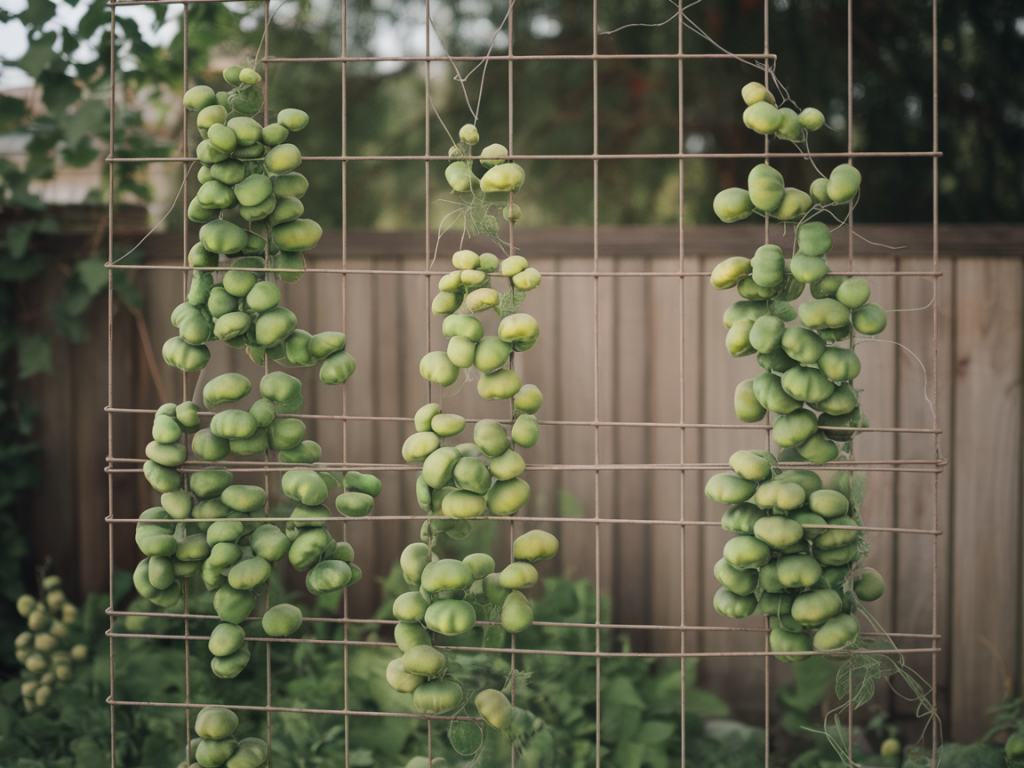
Reinforce the main legs: Slide or place a metal stake (rebar or galvanized steel) directly behind each trellis leg. For an IKEA trellis, I often use 6–8 mm rebar driven at least 30–40 cm into the soil or potting mix. If the trellis legs are hollow, thread the stake inside them if possible. Secure with heavy-duty cable ties or hose clamps. This makes the legs far less likely to bend under the weight of the vines and pods.Anchor the base: In a pot, add a bag of gravel or fit earth anchors that screw into the mix (I use a mix of compost and grit and then an anchor with a long shaft). In the ground, use long screw-in anchors or bury the stakes deeper. A well-anchored base prevents the whole structure from rocking and reduces strain on plant stems.Add lateral bracing: Heavy climbers generate sideways forces. I add a crosswire or a lightweight chain between opposite trellis legs about halfway up to stop the bowing. For tall structures, add a second cross bracing higher up. Use turnbuckles on the wire so you can tighten as needed when the season progresses.Strengthen joints: Weak welded or glued joints are a common failure point. Wrap these with outdoor-grade tape, small metal straps, or hose clamps. For wooden or bamboo trellises, lash with galvanized wire or strong twine and coat with a bit of exterior wood glue for extra hold.Create a soft interface for stems: Direct contact between plant stems and stiff metal can lead to chafing and breakage. I sleeve the areas where stems touch—small sections of garden hose or soft plastic tubing work well. This cushions the stem and prevents wounds, especially where vines wrap tightly.Train, don’t tie too tight: Use soft ties or twine with a figure-8 method, leaving space for stems to swell. I tie stems loosely to the trellis every 20–30 cm as they grow, guiding them onto stronger verticals or string lines. Avoid winding stems tightly around rigid canes; instead, run vertical strings along which the beans can climb naturally.Distribute weight with string grids: For the heaviest loads I create a grid of horizontal twine across the trellis (approx. every 30–40 cm). The beans climb the vertical strings and drape some weight onto the grid, so individual stems are less loaded at a single point. I anchor the grid to the reinforced stakes.Consider a frame or removable support: Sometimes the simplest fix is to mount the IKEA trellis into a stronger DIY frame (made from 2x2 treated timber or metal angle) that carries the load. The trellis stays decorative while the frame does the heavy lifting. This is my go-to when I want to keep the trellis’s look but need big strength.Planting and training tips to reduce breakage
Time planting so vines set before extreme heat or storms, which can add stress.Space plants correctly—crowding forces stems to compete and wrap tightly. For pole beans, 7.5–10 cm apart on a vertical support is fine; for runner beans, 15–20 cm helps avoid overloading single stems.Pinch out the central leader for massive plants once they reach the top of the trellis to encourage more lateral growth and reduce top-heavy weight.Harvest pods regularly—heavy, mature pods add a lot of weight and increase bending stress.Troubleshooting common problems
If the trellis starts to lean mid-season: tighten guy wires, add a diagonal brace, or sink the stakes deeper. Move quickly—leaning increases torque and plant breakage risk.If stems are rubbing and showing damage: gently remove the damaged section if necessary and re-tie the stem to a padded support. Watch for secondary infections and snip any dead tissue cleanly.If ties are cutting into stems: replace with wider, soft ties and retie looser. Elastic plant ties are helpful because they expand as the stem grows.What I plant on these retrofitted trellises
Runner beans (I often plant 'Scarlet Emperor' or 'Painted Lady' for flowers and pod size) and pole beans (classic 'Blue Lake' or 'Scarlet Runner') are my favorites because they reward with lots of pods and flowers for pollinators. I also use the stronger trellises for vining nasturtiums which are lighter but can get heavy when flowering heavily, and even for heavy-fruited cucumbers if I add additional horizontal slings to carry fruits.
When I retrofit a cheap trellis, I aim to balance thrift and longevity. Proper reinforcement, good anchoring and gentle training protect the plants from breakage and keep the garden looking tidy. The next time you bring an IKEA trellis home, try these upgrades and you'll get the best of both: a pretty structure and a durable support for heavy climbers.