I often find that the difference between a pot that struggles and one that thrives comes down to the potting mix. When you want fast-draining containers and bigger, healthier root systems, the right mix is everything. Over the years I've tested dozens of blends on balconies, raised tubs and patio planters. I’ve learned which ingredients encourage roots to spread, which hold too much water, and how to adapt mixes for different plants and climates.
Why potting mix matters more than the pot
People focus on pots, drainage holes and watering schedules — all important — but the medium your plants grow in affects oxygen availability, root temperature, nutrient retention and disease risk. A heavy, moisture-retentive mix can suffocate roots, invite rot and limit root expansion. Conversely, a light, coarse, well-aerated mix encourages roots to explore and grow stronger, which in turn makes plants more drought-resilient and productive.
The characteristics of a fast-draining, root-friendly mix
- Good aeration: Roots need oxygen. Air pockets in the mix reduce compaction and encourage root tips to grow.
- Fast drainage: Excess water should flow freely; pots that stay soggy promote root rot and fungal problems.
- Moisture buffering: While draining quickly, a good mix still holds small quantities of water and nutrients near the roots.
- Stable structure: The mix should maintain its crumbly texture over months (not collapse into fine dust).
- Lightweight: Important for hanging baskets and balcony containers, but not at the expense of stability for larger plants.
Core ingredients I use and why
Below are the ingredients I reach for and how each one contributes to drainage and root development.
- Coarse pine bark (or fir bark): Adds long-lasting structure and creates air channels. I use fine-grade bark for small pots and coarse for larger planters.
- Perlite: A volcanic glass that expands when heated; excellent for lightness and drainage. I prefer horticultural perlite (not the cheaper screened variants that crumble).
- Horticultural grit or pumice: Small angular stones that resist compaction. Pumice is lighter and holds some moisture; grit is heavier but long-lasting.
- Coconut coir: A renewable alternative to peat that retains water while remaining airy when mixed with coarse elements. I rinse coir to remove salts.
- Compost (well-aged): Provides nutrients and beneficial microbes. Use sparingly in container mixes to avoid over-retention of water.
- Premium potting soil or loam: Forms the base but should be blended with coarse components to avoid creating a dense block.
- Slow-release fertilizer: A balanced, slow-release granule (e.g., Osmocote or Nutricote) helps support steady feeding without making the mix waterlogged.
Three tried-and-true mixes I use
Here are mixes I rely on for different container types: small pots, general patio containers and larger specimen pots.
| Mix | Ingredients (by volume) | Best for |
|---|---|---|
| Quick-drain small-pot mix | 1 part coir or peat, 1 part perlite, 1 part fine pine bark, 1/4 part compost | Herbs, succulents, small annuals in 10–20 cm pots |
| All-purpose patio container mix | 2 parts premium potting soil, 1 part perlite, 1 part coarse bark or pumice, 1/4 part compost | Mixed planters, summer flowers, vegetables in 20–40 cm pots |
| Large specimen/root-expansion mix | 1.5 parts loam or potting soil, 1 part pumice or grit, 1 part coarse bark, 1/2 part coir, 1/4 part compost | Large shrubs, fruit trees in big containers, plants that need deep rooting |
Adjusting mixes for specific plants
Not all plants have the same needs. Here are tweaks I make depending on the species:
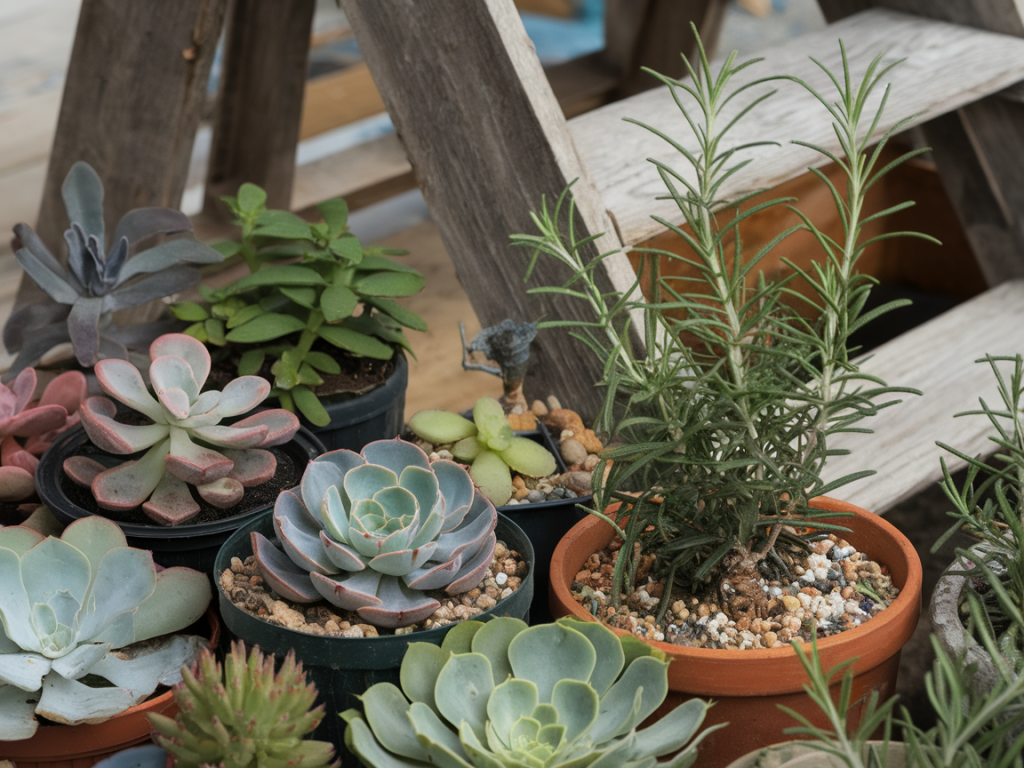
- Succulents and cacti: Replace most of the fine base with pumice/grit and reduce compost to a tiny pinch. Use a succulent-specific potting mix or make your own: 1 part potting soil, 2 parts pumice, 1 part coarse sand.
- Vegetables and heavy feeders: Increase compost to 1/3 volume and add a slow-release fertilizer. Keep good drainage by using more perlite/pumice rather than more soil.
- Orchids and epiphytes: Use large bark chunks and avoid any fine soil. These plants depend on air more than water.
- Shade-loving perennials: Add more organic matter (compost) but balance it with grit to prevent waterlogging in cooler spots.
Practical tips when filling pots
- Don’t rely solely on rocks under the drainage hole: A layer of gravel doesn’t improve drainage — it can create a perched water table. Use coarse mix all the way through.
- Pre-wet coir and compost: Moisten components before mixing to avoid dry pockets that repel water initially.
- Leave room at the top: Fill pots so water has space to flow without washing soil out of the top.
- Top-dress annually: Replace the top 2–4 cm of mix each year in long-term containers to refresh nutrients and prevent compaction.
- Use breathable pots where possible: Unglazed terracotta and wood let moisture escape and encourage root pruning; useful if you want faster drying.
Products I recommend
Over time I’ve come to trust a few reliable brands for specific components:
- Espoma Organic Potting Mix — good base for general planting when mixed with perlite for faster drainage.
- Osmocote Smart-Release — excellent slow-release fertilizer for containers.
- Local garden centre bark or compost — I prefer locally produced compost for microbial diversity and lower transport footprint.
- Perlite and pumice from horticultural suppliers — avoid cheap "builders" sand; the angular texture matters.
How to know if a mix is working
Watch your plants: quick-draining mixes produce deeper, more fibrous roots, healthier, glossier foliage and better flowering. Signs the mix is too dense include yellowing leaves, slow growth, a sour smell when you dig around roots, and roots that circle the pot instead of spreading. If you see those, repot into a lighter mix and cut away any rotted roots before replanting.
Making your own container mixes takes a bit of trial and error, but once you find a blend that suits your climate and plant choices, you'll see faster growth, stronger root systems and fewer water-related problems. I try small batches first and scale up when a recipe proves reliable — and I always keep notes. If you’d like, I can share printable recipes for specific plant groups or help troubleshoot a problematic pot with photos.