I test a lot of seed-starting gear every spring and one question I hear constantly is: which biodegradable seed trays actually break down in a real garden compost pile — and which ones just sit there looking eco-friendly while refusing to disappear? I’ve put a dozen common options through backyard compost and potting-soil trials over the last three seasons so I can give you practical, honest answers that work for beginner seed starters.
What I tested and why it matters
My focus was on items you can buy easily in garden centres or online: peat and coir pellets (Jiffy-style), pressed paper pulp trays (often sold as seed trays or egg-carton style cells), cardboard and egg-boxes, wood-fibre pots, manure-based pots (CowPots), and molded fibre trays labelled “biodegradable.” For each I looked at:
Key findings — quick summary
Short version based on my tests:
Detailed observations
Coir and peat pellets (e.g. Jiffy): These are brilliant for transplanting — you hydrate a pellet, plant the seed, and later pop the whole thing into a pot or the ground. In a hot compost pile they soften and largely break down in a few weeks to a couple of months, especially the coir versions. Peat versions are less desirable for ecological reasons (peat extraction) and they can stay intact longer if your compost doesn’t reach high temperatures. If your compost is cool, expect several months to a year for full breakdown. Practical tip: gently rupture the outer mesh or peat wrap before composting to help microbes in.
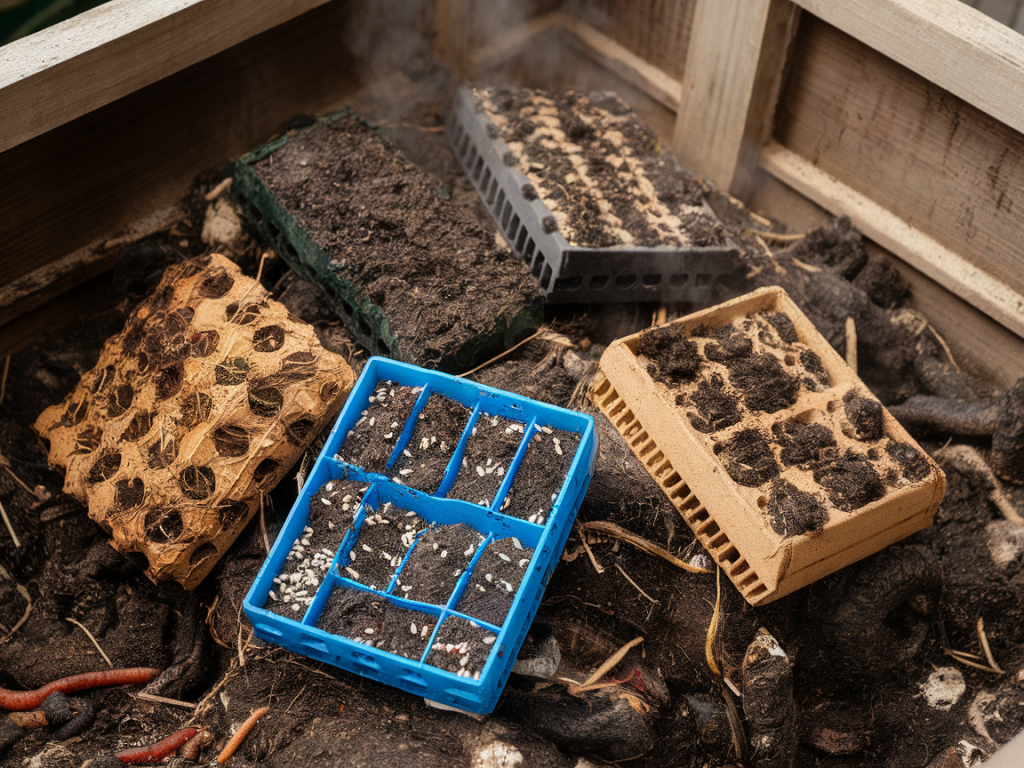
Pressed paper pulp trays / egg-carton style cells: These are what I use most of the time. They’re cheap, handle seedlings well, and break down admirably in all compost conditions. I planted dozens of trays in pots and directly in garden beds; within 4–8 weeks in a warm compost, and often 2–3 months in a cooler pile, they had almost disappeared. Even better, they wick moisture rather than repelling it, so roots move through them readily.
Cardboard and egg boxes: Free and effective. If you cut or shred cardboard into small pieces and mix it into your compost, decomposition is quick. Whole boxes and thick corrugated cardboard take longer but will eventually integrate. Avoid heavily printed, waxed or plastic-coated cardboard — those coatings stop composting and can leach inks. Egg cartons made of paper pulp behave like pressed trays and break down fast.
Wood-fibre pots: These can be pricier but they’re durable and compost-friendly. I tested several branded wood-fibre pots and found they soften in a full compost pile over 2–3 months, and in soil they integrate into the root zone without forming barriers. Great for slower-growing perennials or for planting out into the garden where you want a sturdier pot that still disappears.
CowPots and manure-based pots: I like these for outdoor transplanting — they’re nutrient-rich and sturdy. CowPots break down in compost and in garden soil reasonably quickly (1–6 months depending on conditions) and add organic matter. They can be a touch odorous when wet initially, but nothing problematic.
Molded “biodegradable” trays (ambiguous labels): These are the tricky ones. Some are pure paper pulp and act exactly like pressed trays; others contain small amounts of plastic or resin binders to improve durability. Those binders slow decomposition dramatically. Always check the product description: words like “100% paper/pulp” or “wood fibre” are good signs. Vague marketing terms sometimes hide less compostable materials.
How to compost seed trays faster — practical steps
Practical tips for beginner seed starters
Comparison table — breakdown speed in typical home conditions
| Tray type | Breakdown in hot compost | Breakdown in cool compost | Planting-out suitability |
|---|---|---|---|
| Pressed paper pulp cells | 2–8 weeks | 6–12 weeks | Plant whole or shred |
| Coir pellets (Jiffy) | 4–12 weeks | 3–12+ months | Plant whole (works well) |
| Peat pellets | 6–12 weeks | months–year | Plant whole but consider environmental impact |
| Wood-fibre pots | 2–10 weeks | 2–6 months | Plant whole |
| CowPots (manure) | 1–6 months | 2–9 months | Plant whole (nutrient boost) |
| Cardboard / egg boxes | 2–12 weeks (shredded faster) | 2–6 months | Shred or plant small sections |
I know gardeners want low-fuss solutions that actually help the soil, not add micro-plastic or wasted money. From my tests, paper pulp and simple wood or manure-based pots are the most reliably compostable choices. Coir is a close second for convenience. If you’re aiming for the lowest environmental impact, avoid peat and anything with a wax/plastic coating, and always prepare trays for composting by shredding or rupturing wrappers.
If you’d like, I can put together a short shopping list of reliable brands and links I’ve used, or a step-by-step mini-guide for starting seeds with the fastest-composting trays — tell me which seed types you’re starting and I’ll tailor it to your needs.