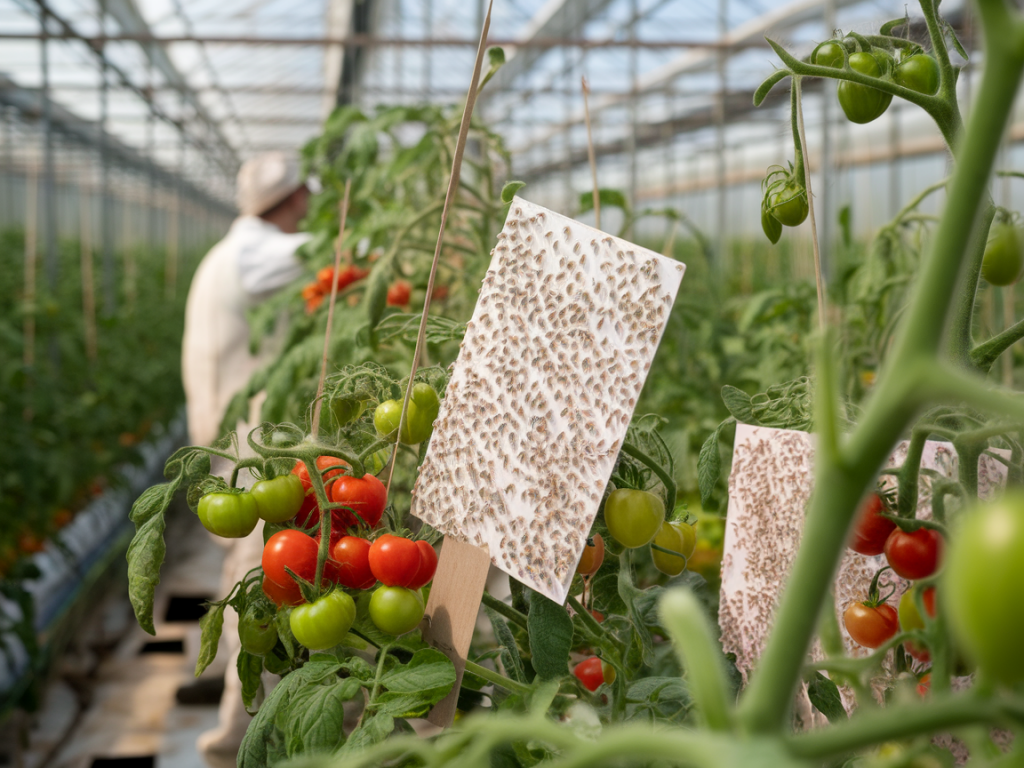
I grow most of my tomatoes in a small greenhouse—it gives me earlier harvests and more control—but every summer I battle the same nuisance: whiteflies. They're tiny, persistent and they can quickly weaken plants and spread viruses. Over the years I’ve settled on a combination that really works for me: yellow sticky cards to monitor and cut down adult populations, neem as a gentle yet effective organic spray, and a targeted release schedule that times treatments to interrupt the whitefly life cycle. Below I’ll share the exact steps, a simple schedule I follow, troubleshooting tips and product notes so you can adapt this approach to your own greenhouse.
Why this combo works
Whiteflies have a short life cycle and high reproductive capacity. Sticky cards catch the flying adults before they lay too many eggs. Neem (azadirachtin-based products) acts on multiple stages—adults reduce feeding and egg-laying, and larvae exposed via leaf residues are disrupted in development. When you combine both and apply them on a timed schedule to match the pest cycle, you reduce overall pressure while minimizing spray frequency and non-target impacts.
What I use
Here are the items I keep on hand in my greenhouse toolkit:
Step-by-step routine I follow
I aim for a low-effort, high-impact routine that I can do in about 20–30 minutes per greenhouse visit.
Targeted release schedule
Whiteflies develop from egg to adult in about 14–21 days depending on temperature. That’s why a repeated, timed application is more effective than random spraying. Here’s the schedule I use during active whitefly pressure:
| Day | Action | Why |
|---|---|---|
| Day 0 | Place sticky cards, prune, and apply first neem spray | Catch adults, remove heavy infestations, and expose eggs/larvae to neem residues |
| Day 7 | Inspect sticky cards and plants; spot-spray neem if adults present | Target newly emerged adults before they lay many eggs |
| Day 14 | Full foliar neem application; replace or clean sticky cards if saturated | Disrupt the next cohort of larvae before they mature |
| Day 21 | Inspect; if counts low, reduce to monitoring every 7–10 days. If counts high, repeat cycle | Decide whether continued pressure needs another control cycle |
I typically do two full cycles (0, 7, 14) and then monitor. If catches remain high after two cycles, I continue with another sequence but also look for underlying issues: poor ventilation, nearby host plants, or insecticide resistance.
Application tips for best results
Safety and compatibility
Neem is generally safe for people, pets and many beneficial insects when used as directed, but it can still irritate skin and eyes. I always wear gloves and a mask during mixing and avoid spraying when beneficials are active. Avoid combining neem in the tank with strong alkaline cleaners or copper-based products—read product labels for compatibility. If you use commercial biological controls (parasitic wasps like Encarsia), coordinate applications: some neem products are compatible at lower concentrations, but check compatibility charts or ask the supplier.
Troubleshooting common problems
If you follow the schedule and still see heavy infestations, check these common issues:
When to accept partial control and move on
In a greenhouse setting, the goal is suppression rather than total eradication. A few whiteflies during high season is normal. I aim to keep numbers low enough that plants remain vigorous and yields aren’t affected. If catches on sticky cards fall to a steady low level for two weeks, I switch to weekly monitoring and only spray if counts spike.
If you’d like, I can share my printable checklist for greenhouse whitefly control (sticky card placement map, spray log and a label-compatibility quick reference). Tell me the size of your greenhouse and whether you use biological controls and I’ll adapt the plan to your setup.