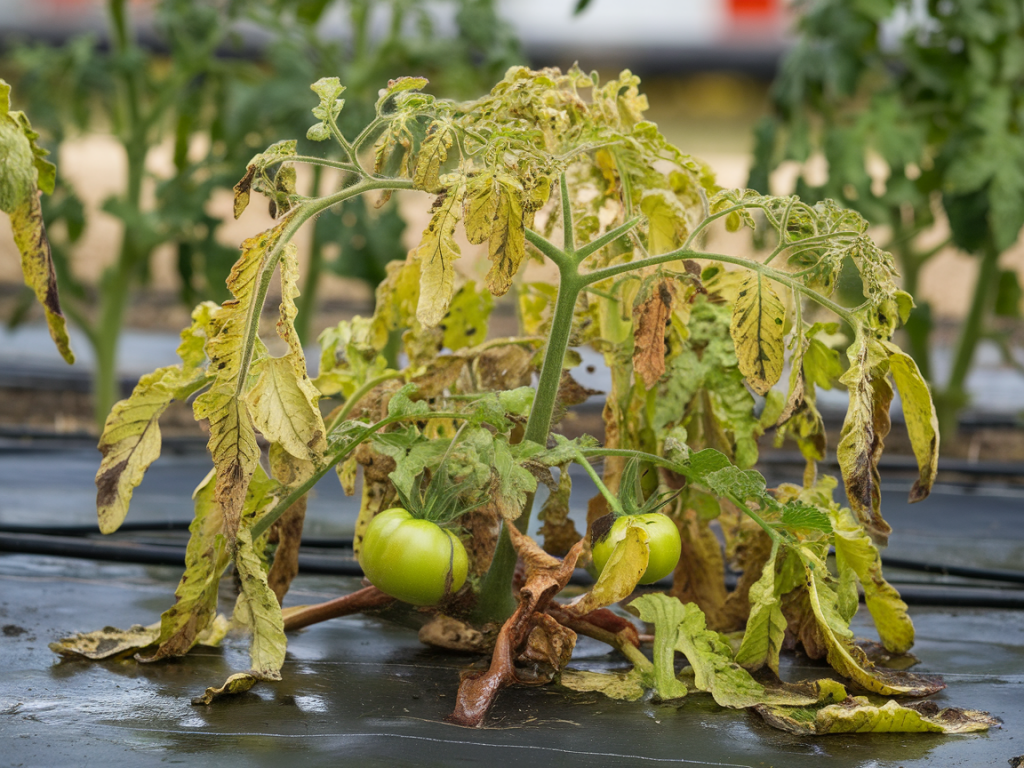
I remember the first season I lost half my tomato crop to early blight — those telltale brown target-shaped spots on lower leaves, the rapid defoliation, and the slow dread as the main stems weakened. Since then I’ve learned that stopping early blight takes patience and a mix of smart cultural habits plus timely, targeted treatments. Copper fungicides can be a useful tool in that toolbox, but they work best when combined with cultural fixes that limit disease spread and strengthen the plants. Here’s what I do on my plot and what I recommend if you’re fighting early blight on tomatoes.
What is early blight and why copper helps
Early blight (caused by the fungus Alternaria solani) shows up as concentric dark rings on older leaves, often starting low and working upward. It thrives in warm, humid conditions and spreads by splashing water and infected debris. Copper fungicides are broad-spectrum protectants that help prevent fungal spores from germinating on the leaf surface. They don’t cure an infected plant overnight, but they reduce new infections and give healthy tissue a better chance.
Start with sanitation and cultural fixes
Before reaching for chemicals, I always tighten up the basics. These cultural fixes are the foundation — they reduce the inoculum and the environmental conditions early blight loves.
Remove and dispose of infected leaves as soon as you spot them. Don’t compost heavily infected material — burn or discard it away from the garden if local rules allow.Prune lower leaves to improve airflow and keep foliage off wet soil. I remove the bottom 6–12 inches of foliage on indeterminate varieties once plants are established.Stake, trellis or cage plants so they dry faster after rain or watering. Tangled, shaded plants are prime blight habitat.Water at the base, not overhead. Drip irrigation or soaker hoses dramatically cut splashing that spreads spores.Rotate crops — don’t plant tomatoes, potatoes or eggplants in the same bed each year. Alternaria survives in soil and debris.Improve soil health with organic matter and balanced fertility. Overly lush growth from high nitrogen can be more susceptible to disease; aim for steady, balanced feeding.Choose resistant varieties when possible
I always check seed descriptions for any mention of Alternaria resistance — while absolute resistance is rare, some cultivars show better tolerance and will hold foliage longer. If you garden in a humid climate, try to prioritize these varieties or shorten your season with early-maturing types to avoid the peak blight window.
Using copper fungicide: how, when and safety
I use copper as a protectant — meaning I apply it before heavy disease pressure or at the first sign of spots, not after the plant is heavily defoliated. Common formulations include copper sulfate, copper oxychloride and copper hydroxide. Brands you might see include Kocide (copper hydroxide) or classic Bordeaux mixture (copper sulfate + lime). Always follow the product label, but here are the general practical steps I follow:
Read the label carefully and mix at recommended rates. Over-application can cause leaf burn (phytotoxicity) and long-term soil copper buildup.Apply in the evening or early morning to minimize leaf burn from sun and to avoid spraying pollinators. Avoid spraying when temperatures exceed label limits.Start sprays at transplanting or early growth if you’ve had blight in previous seasons, then repeat on the schedule recommended (commonly every 7–14 days) and after heavy rains because rain washes copper off leaves.Alternate copper with other compatible fungicides or biologicals when possible to avoid reliance on a single control method; that helps slow resistance (even though copper is a multi-site protectant and resistance is less common than with single-site products).Wear gloves, eye protection and a mask when mixing and spraying. Copper solutions can irritate skin and eyes.Practical spray schedule I use
My routine in a season with moderate risk looks like this:
At transplanting: a protective copper spray once foliage is dry.Every 7–10 days during warm, humid weather or after rains.If I spot the first lower-leaf lesions: increase frequency to every 7 days until new growth is free of spots, then extend interval.Stop sprays a week or two before harvest if label allows — check food crop pre-harvest intervals on the product label.Avoiding phytotoxicity and soil accumulation
One of the questions I get a lot is “Will copper hurt my plants or soil?” Too much copper can indeed burn tender leaves and over years it can accumulate in the soil, affecting microbes. To minimize risks:
Stick to label rates and don’t spray more often than recommended.Avoid mixing copper with alkaline materials or certain oils that can increase leaf burn risk. If you tank-mix, check compatibility charts or test on one plant first.Use cultural controls aggressively to reduce how often you need to spray — the fewer applications, the better for soil health.Combine copper with other IPM tools
Copper is one tool among many. Here are other measures I pair with copper for an integrated approach:
Biological fungicides: products with Bacillus subtilis (e.g., Serenade) or Trichoderma can offer additional protection and are safe to use with many copper products. Read labels for compatibility.Mulching: a clean layer of straw or composted mulch reduces soil splash. Keep mulch away from direct contact with stems.Timely removal of volunteers and solanaceous weeds: these can harbor the fungus between seasons.Monitoring and scouting weekly: early detection saves plants — pruning a few leaves early prevents a cascade of defoliation.Troubleshooting common problems
If copper seems ineffective, consider these possibilities:
Application timing: Copper works preventively. If you wait until the disease is widespread, copper won’t reverse established lesions.Wash-off by rain: Reapply after heavy rains.Phytotoxicity mistaken for disease: If you sprayed in hot sun and now leaves have bronzing, it might be burn from copper, not blight.Misdiagnosis: Other issues (Septoria leaf spot, bacterial spot) can look similar. Septoria has smaller spots with lighter centers; bacterial diseases often have water-soaked margins. When in doubt, send a photo or sample to your local extension service.Products and quick reference
| Product / Type | Notes |
|---|
| Kocide (copper hydroxide) | Good protectant; labeled for many vegetables. Lower phytotoxicity than older copper sulfates. |
| Bordeaux mixture (copper sulfate + lime) | Traditional, effective but can be harsher on leaves and soil; use carefully and sparingly. |
| Copper oxychloride | Another solid protectant option; follow label for rates and intervals. |
Early blight won’t always disappear overnight, but by tightening cultural practices, choosing tolerant varieties, and using copper protectively and responsibly, you can stop the worst of the damage and keep tomatoes producing. If you want, send me photos of your plants and the conditions (watering method, recent weather) and I’ll help you diagnose the next steps for your garden.