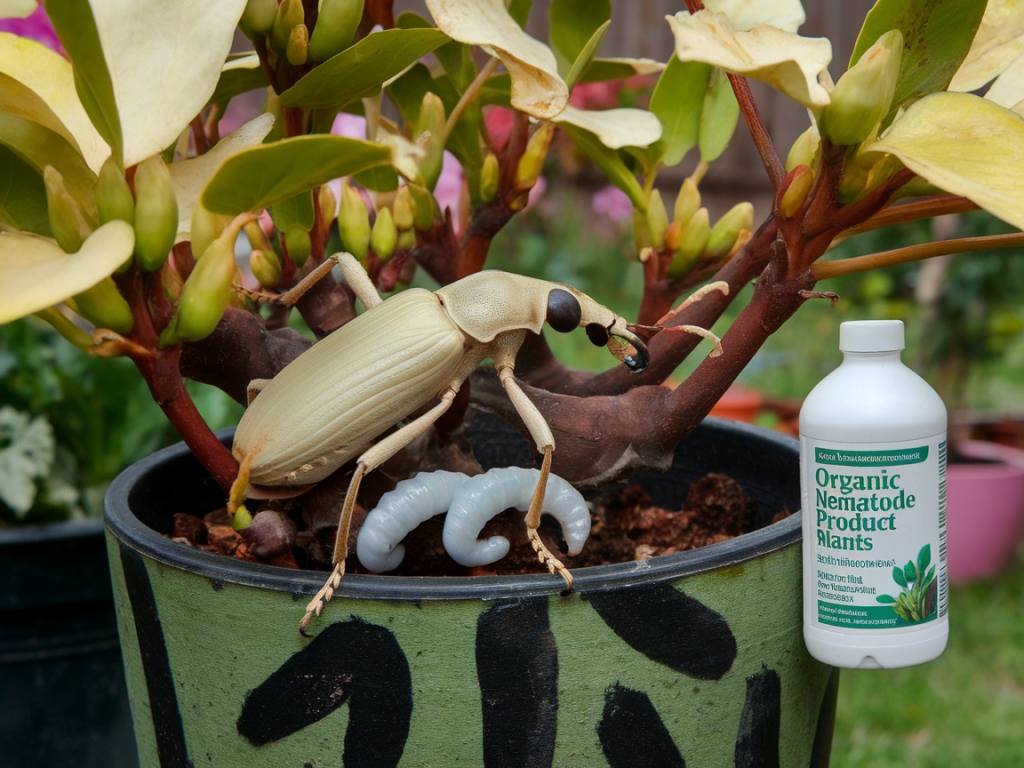
I lost more than a few beloved potted rhododendrons to vine weevil a few years ago before I finally turned to biological control. After reading studies, testing products in my own patio pots and talking to other gardeners, I now use nematodes as a regular part of my pest-control kit for containers. In this post I’ll explain which organic nematode species actually work against vine weevil, how they differ, how to apply them correctly to potted rhododendrons, and practical tips that spare you trial-and-error frustration.
Why nematodes are a good option for vine weevil in pots
Vine weevil larvae live in compost and feed on roots at night, often killing container-grown rhododendrons without obvious warning until the plant wilts. Chemical insecticides are limited for soil-dwelling larvae and I prefer solutions that are safe around pollinators, wildlife and my family. Entomopathogenic nematodes (EPNs) are microscopic roundworms that seek out insect larvae, enter them and release bacteria that kill the host. They’re sold as a living, organic control you apply as a soil drench.
Which nematode species actually control vine weevil?
The two species most commonly recommended and used against vine weevil larvae are Steinernema kraussei and Heterorhabditis bacteriophora. They’re not identical in behaviour, and that difference is useful depending on your climate and the time of year.
| Species | Strengths | Best conditions |
| Steinernema kraussei | Very effective against vine weevil larvae at cooler temperatures; penetrates compact compost well. | Spring & autumn in cooler climates; soil temps around 5–20°C. |
| Heterorhabditis bacteriophora | Works well across a broader temperature range and in warmer conditions; often faster-acting. | Warmer soils (above ~12–15°C); mid-spring through early autumn in mild climates. |
Many commercial products are formulated with one or the other species, and some brands sell a blend targeted specifically at vine weevil. Look at the label: it will usually state the species (S. kraussei or H. bacteriophora). If you garden in a cool climate I favour S. kraussei in autumn and early spring; in summer months H. bacteriophora can be more reliable.
When to apply nematodes to potted rhododendrons
Timing makes a big difference. I apply nematodes at two key moments:
If I know I had a vine weevil problem the previous season I treat both times. For persistent infestations I make two applications six to eight weeks apart, which helps cover larvae that hatch at different times.
Preparing and applying nematodes in pots — step by step
Commercial nematodes arrive as a damp sponge or concentrated sachet of live nematodes. They’re delicate—avoid hot, dry conditions and don't let them sit in direct sun. Here’s how I apply them to potted rhododendrons:
Practical dosage guide (typical)
Dosage varies by product, but to give you an idea, a common recommendation is one sachet (enough nematodes for about 50–100 small pots) diluted into 1–2 litres of water. For larger single containers, treat each pot as if you have a small bed of soil and follow the “sachet per X square metres” guidance converted to pot volume. If in doubt, call the supplier or check the label — it’s better to apply slightly more often than to over-concentrate a single drench.
Storage and handling tips
I keep nematodes in the fridge until the last moment and never freeze them. Use them within the time window stated on the packet once opened. Wear gloves only because they are living organisms and you don’t want to contaminate the dose; there’s no personal health risk from these specific nematodes. Avoid mixing nematodes with water that has been treated with chlorine; let tap water stand for a few hours or use rainwater if your supply is heavily treated.
What results to expect and how to check success
Expect gradual improvement rather than immediate miracles. Following an autumn application I often see fewer wilting plants the following spring. After treatment, dig gently in the compost a few weeks later and look for diminished numbers of creamy, C-shaped larvae. Commercial trials show very good reductions in vine weevil larvae when applications are timed and conditions are right; in my pots I usually notice healthier roots and fewer new adults the next late spring.
Common pitfalls and how to avoid them
Brand notes and where to look
Many garden centres carry nematode products specifically labelled for vine weevil; brands vary by country. Look for products clearly stating the nematode species and “for vine weevil” on the label. If the species isn’t stated, contact the supplier—S. kraussei and H. bacteriophora are the two you want to see. Buying from a reputable garden supplier ensures the nematodes have been stored properly and are within the use window.
Using nematodes isn’t magic, but used correctly they’re one of the safest and most effective organic ways I’ve found to protect potted rhododendrons from vine weevil. With proper timing, moisture management and repeat treatments when needed, you can save a lot of plants that would otherwise be lost.