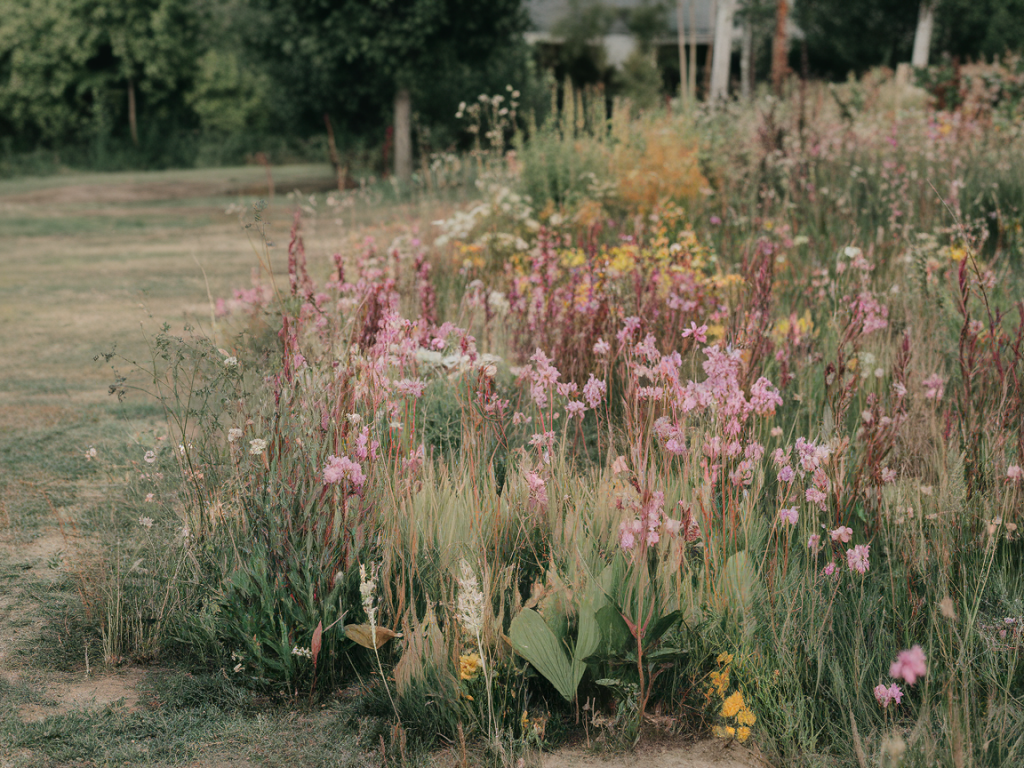
Turning a patch of lawn into a low-maintenance wildflower meadow is one of my favourite garden makeovers. It’s a small change that rewards you with colour, scent and a busy highway for pollinators — and it can be surprisingly simple if you work in stages. Below I share the three-stage approach I use on small lawn conversions: preparation (kill or suppress the turf), establishment (sow and protect) and maintenance (manage for diversity and low effort). This is practical, seasonal and eco-friendly — the Groupegarden way.
Why choose a wildflower meadow?
Before we dig in, a quick note on why I prefer meadows over more intensive borders for some spots. A meadow:
- Supports pollinators and wildlife with flowers through the season.
- Requires little watering once established, especially when seeded with hardy natives.
- Is cost-effective — seed mixes and a little labour beat constant mowing and watering.
- Adds a relaxed, natural look that works well next to formal planting or a cottage-style garden.
Stage 1 — Preparation: remove or suppress the lawn
How you prepare depends on how quickly you want results and how much physical work you’re willing to do. I generally recommend two approaches: sheet-mulching (no-dig) for low effort, or turf removal for faster establishment.
Sheet-mulching (no-dig): This is my go-to when I want to improve soil life and avoid heavy machinery. In late autumn or early spring, mow the lawn as short as possible, water it if the soil is bone-dry, then lay down layers: cardboard (no glossy print), followed by 6–8cm of well-rotted compost or leaf mould, then a thicker layer (10–15cm) of woodchip or mulch. Leave this in place for 6–12 months. The turf underneath dies, and you get a great seedbed rich in organic matter.
Turf removal: If you need quicker results, cut out the turf with a sharp spade or a half-moon turf cutter. Remove the rolls, fork over the soil to a depth of 10–15cm, remove weeds and incorporate a little compost if soil is poor. This method creates a cleaner seedbed and gets you flowering in the first year more reliably.
Tip: If you live somewhere with heavy clay, don't try to create a meadow on permanently waterlogged ground — choose raised mounds or improve drainage first, or pick moisture-loving meadow plants like marsh marigold and iris.
Stage 2 — Establishment: choose seed, sowing and protection
Seed mix choice matters more than dramatic planting. I recommend a local or native wildflower mix with a balanced proportion of grasses — around 60% grasses and 40% flowers is typical for long-lived meadows. Too many fast-growing annuals can give a short burst of colour but a poor long-term structure.
Brands I’ve used and liked include Emorsgate (UK) for native mixes and EcoSeeds for pollinator blends — but check for local suppliers with region-specific mixes. If you’re in North America, look for Native Seed Network or local prairie seed suppliers.
Sowing method:
- Timing: Ideally sow in autumn (after a few frosts) or early spring. Autumn sowing lets seeds experience natural stratification and many species germinate in spring when conditions warm.
- Seedbed: Rake the area to a fine, firm surface (no deep digging unless you removed turf). Press the seed gently into contact with the soil — you can use a roller or walk over the area with flat-soled shoes.
- Sowing rate: Follow supplier instructions; typically around 1–3g/m² for native meadow mixes. Avoid sowing too thickly — thin swards favour more species and reduce competition.
- Protection: For sloped or windy sites, tack the seed down with a light layer (0.5–1cm) of sieved compost or fine soil. Avoid putting on straw as it can create a barrier for seedlings and introduce weed seeds.
Small tip: If the area is visible and you want instant interest while the meadow establishes, sow a short-flowering annual mix (cornflowers, poppies) in strips or scatter low-maintenance bulbs (Allium hollandicum, Narcissus) for early season colour without adding maintenance later.
Stage 3 — Maintenance: mow, cut and encourage diversity
Once established, meadows are low maintenance but do require seasonal management to stay diverse and prevent scrub takeover. Here’s the routine I follow:
- First year: Expect patchy germination. Keep mowing high (8–12cm) if weeds, especially grasses, dominate early. This weakens aggressive plants. Remove cuttings if there’s a heavy annual weed flush; otherwise leave them to recycle nutrients.
- Second year: The sward thickens and perennial wildflowers begin to assert themselves. Do one gentle cut in late summer (after most seed has set) to reduce rank grasses and create open patches.
- Annual cutback: In late summer or early autumn (when most flowers have seeded), do a meadow cut: cut to 8–10cm and remove the cuttings. Removing biomass prevents nutrient build-up, which favours grasses over wildflowers.
Tool choices: A good petrol or electric rotary mower with a high-cut setting works; for small areas I prefer a scythe for the satisfaction and silence. For removing cuttings, use a rake and either compost them away from the meadow or use them as mulch in other beds. Composting works best if the cuttings aren’t too woody.
Troubleshooting common problems
Too many weeds or coarse grasses: Do a light scarify and hand-weed aggressive species. Re-seeding localized bare patches with a plug mix (a handful of meadow seed mixed into compost, then tamped in) helps. Regular annual cutting and removal will gradually shift the balance toward wildflowers.
Poor flowering first year: Many perennials focus on root establishment in year one. Patience pays — expect a more dramatic show in years two and three. If annuals dominate and you want perennials, reduce nutrient levels (remove mowings) and add a plug planting of desired species.
Rabbit or deer browsing: For small areas, temporary netting or a zig-zag of woven wire supports protects young seedlings. Alternatively, plant some less-palatable species (yarrow, Achillea; sedges) at the edges while the meadow establishes.
Seasonal planting calendar
| Season | Tasks |
|---|---|
| Autumn | Sow native mixes, sheet-mulch to suppress turf, plant bulbs for spring, remove cuttings from late summer. |
| Winter | Leave seedheads for birds; plan additional plug planting; avoid heavy foot traffic. |
| Spring | Watch for germination, do light raking, mow high if weeds dominate. Add plugs if needed. |
| Summer | Enjoy blooms; cut after seed set in late summer and remove cuttings. Top up bare patches if required. |
Finally, keep a small notebook or take photos through the seasons. I track which species thrive, where birds nest, and which areas need a little extra help. Over three years you’ll see the meadow evolve — and with relatively little work, you’ll have a beautiful, wildlife-rich patch that fits perfectly into a sustainable gardening approach promoted on Groupegarden (https://www.groupegarden.com).