I’ve always treated companion planting as one of those simple garden strategies that rewards you over and over: a few smart plant pairings can cut pests, improve pollination and even increase tomato yields without reaching for chemical sprays. Over the years I’ve tried dozens of combinations in beds, containers and a small greenhouse, and what follows are the pairs and practices that consistently work for me—clear, practical, and easy to try this season.
Why companion planting works (and when it doesn’t)
Companion planting works through a few reliable mechanisms: scent masking or repelling pests, attracting beneficial insects (predators and pollinators), improving soil or microclimate, and acting as trap crops to protect your main plants. That said, it’s not magic. Results depend on timing, plant health, and the specific pests in your area.
I’ve learned the hard way that overcrowding “for biodiversity” can create humidity problems and fungal disease if airflow is compromised, so balance is key: plant companions close enough to be effective, but not so dense that tomato leaves stay wet.
My go-to companion pairs for tomatoes
Below is a table of companion pairs I use regularly, what they do, and quick planting tips. These have reduced slug, aphid and whitefly pressure in my beds, improved pollination, and sometimes even added a little extra flavor to salads.
| Companion | Benefit | How I plant it |
|---|---|---|
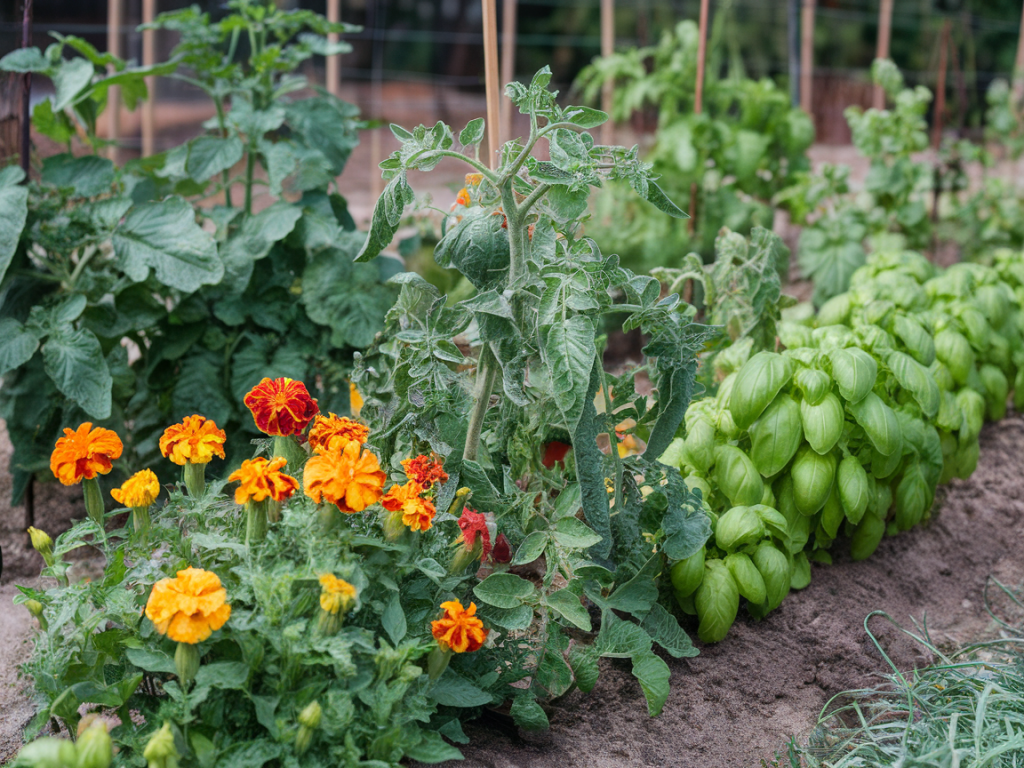
| Basil | Improves flavor (anecdotally), repels tomato hornworms and some flies, attracts pollinators | Plant 1–3 basil plants per tomato plant; trim regularly and use in the kitchen to keep growth vigorous |
| Marigolds (Tagetes) | Repel root-knot nematodes (some species), deter certain beetles; strong scent masks tomato odors | Plant as border or interplant every 1–2 m; French marigold (T. patula) is compact for containers |
| Nasturtiums | Trap crop for aphids and whiteflies; can reduce flea beetle damage | Grow as a trailing groundcover under tomatoes or in pots nearby; remove infested flowers if necessary |
| Borage | Attracts bees and predatory insects, may improve tomato growth and flavor | Plant a few per bed; self-seeds so manage volunteers if you want to control density |
| Chives & Garlic | Repel aphids and spider mites; help reduce fungal spores on leaves via antimicrobial scent | Plant in clumps around the bed or in pots interspersed with tomatoes |
| Dill & Parsley | Attract beneficial wasps and lacewings that prey on caterpillars and aphids | Sow in small patches or in front of the tomato row; allow some to flower |
| Beans | Fix nitrogen; vertical beans give shade and reduce soil splash (reducing blight risk) | Interplant bush beans between tomato plants or trellis pole beans nearby—watch competition for light |
How I arrange companions in a tomato bed
- I plant taller companions (like dill that will flower) on the north or windward side so they don’t shade the tomatoes.
- Ground-covering companions (nasturtiums, marigolds) go at the base to cut down on soil splash—this reduces early blight and keeps fruit cleaner.
- Basil and chives live close enough to affect scent and deter pests but are clipped regularly so airflow stays good.
- Reserve one or two plants as “sacrificial” trap crops (nasturtiums or sunflowers) planted a few meters from the main bed to lure pests away.
Timing, spacing and practical tips
Timing matters. Plant quick-growing annual companions (basil, nasturtiums, marigolds) a couple of weeks before or at the same time as transplanting tomatoes so they establish together. For biennials/perennials (chives, borage), set them in the bed a season early if possible so they’re well-rooted.
Spacing: I aim for 30–45 cm between tomato stems and tuck herbs or small flowers 15–30 cm from the stem. If you’re using indeterminate tomatoes with heavy foliage, put companions slightly further away to preserve airflow.
Watering: Water at the base of tomatoes. Overhead watering encourages fungal diseases—if you pair low-growing companions that like the same moisture level, use drip irrigation or a soaker hose to keep leaves dry.
Dealing with specific pests
Here are some common pest problems and the companion strategies I use to manage them:
- Tomato hornworms: Hand-pick when you see them, and plant borage and basil nearby. Parasitic wasps (attracted by dill, fennel and parsley flowers) will help keep them in check.
- Aphids: Nasturtiums work well as trap crops; chives, garlic and strong-smelling herbs can repel. Also introduce or encourage ladybirds and lacewings by letting some umbellifers flower.
- Whiteflies: Use reflective mulch or silver-colored groundcover plus nasturtiums to draw them away. Yellow sticky traps are a good supplementary tool—brands like StickyTraps or EcoGarden Sticky Cards are what I use in the greenhouse.
- Root-knot nematodes: Rotate crops and plant marigolds (Tagetes) in affected beds—sow them as a pre-plant cover crop if nematodes are a chronic issue.
Examples from my garden
One season I had a persistent aphid problem on my tomatoes. I planted a border of nasturtiums and added several parsley clusters. Within three weeks aphid numbers on tomatoes had dropped sharply while ladybirds and lacewings increased. I also used a homemade garlic spray (200 g crushed garlic in 1 L of water, steeped 24 hours and strained) as a short-term knockback—use with caution and test on a leaf first.
Another year, borage and bees near a small row of patio tomatoes increased fruit set noticeably. The borage flowers were busy all day, and the difference in the number of fruits per truss was obvious compared to the previous year.
When companion planting won’t save you
Companions reduce risks but don’t replace good crop hygiene, rotation and basic care. If you’re battling late blight, rely on resistant varieties, remove affected foliage immediately, and avoid wet-canopy conditions. If soil is poor, add compost and balanced feed—companion plants won’t fix major nutrient deficiencies.
Quick starter checklist
- Choose 2–3 companions per tomato bed: one pollinator/benefit plant (borage/dill), one repellent or deterrent (basil/chives/marigold), and one trap or groundcover (nasturtium).
- Plant companions at transplant time or slightly earlier so they establish together.
- Maintain airflow and avoid overcrowding—prune tomatoes and clip companions as needed.
- Observe: watch where pests are congregating (on trap crops?) and adjust or remove plants if they’re becoming a liability.
If you’d like, I can share a printable bed layout template for a standard 1.2 x 2.4 m raised bed with companion placements, or suggest specific varieties of basil, marigold and borage that perform well in containers or small urban plots. Tell me your climate zone and the main pest you’re worried about, and I’ll tailor the plan to your garden.