Garden Design

A simple waterwise planting plan for a small south facing balcony

A simple waterwise planting plan for a small south facing balcony

South-facing balconies are tiny pockets of sunshine and possibility — I’ve turned a narrow 1.5‑metre balcony into a productive, fragrant and low-maintenance spot by focusing on smart plant choices, right-sized containers and a few waterwise tricks. If your balcony bakes in the midday sun, this simple planting plan will help you keep things lush without daily watering or wasted effort.

Understanding the site before you plant

Before buying plants, I always map the light, wind and heat. A south-facing balcony typically gets the most intense sun from late morning through the afternoon. Surfaces like concrete or dark paint reflect extra heat, and winds can increase evaporation.

Take five minutes across a couple of days to note:

  • How many hours of direct sun the balcony receives (approx.).
  • Which areas are hottest — near the rail, the floor, or next to the wall.
  • Where you can fit containers that won’t block access or views.
  • That quick survey guides container sizes, placements, and whether you need shade cloth or a trellis with climbers to moderate heat.

    Choose waterwise, sun-loving plants

    For me the goal is a mix of structure, flowers and scent — all from plants that tolerate dry spells. I favour Mediterranean and native perennials, drought-tolerant herbs, and a few annuals for colour.

    Here are my go-to choices for a south balcony:

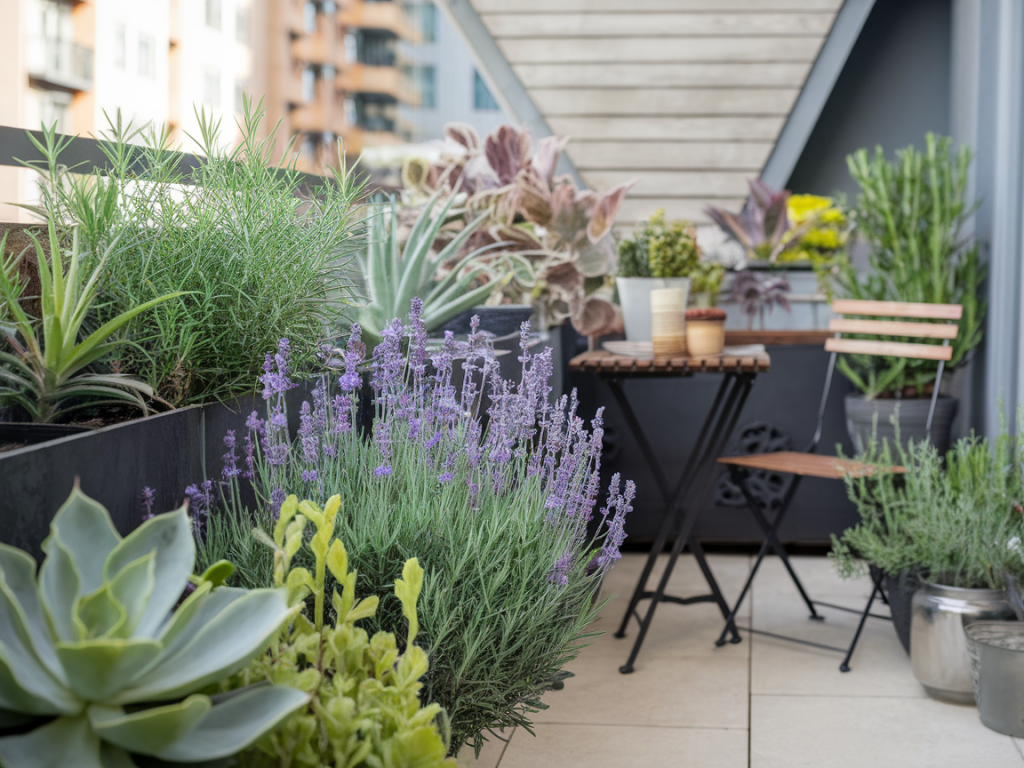
  • Lavender (Lavandula angustifolia or L. x intermedia) — fragrance, pollinators and very drought-tolerant.
  • Rosemary (Rosmarinus officinalis / Salvia rosmarinus) — evergreen shrub, useful in the kitchen, loves sun.
  • Salvias and Penstemon — long-flowering perennials that tolerate heat.
  • Succulents (Sedum, Sempervivum) — perfect for hot spots and shallow containers.
  • Gaura or Verbena bonariensis — airy, long-blooming and drought-tolerant.
  • Native perennials (depending on your region) — often the most resilient and best for pollinators.
  • Herbs like thyme, oregano, santolina — good groundcover and heat lovers.
  • Compact fruiting tomatoes or dwarf peppers — if you want edibles, choose small, sun-loving varieties and a deep planter.
  • Container selection and soil mix

    Size matters more than style for waterwise planting. Large volume containers hold more moisture and reduce stress between waterings. I aim for at least 20–30 litres for larger shrubs or small fruiting plants; smaller pots are fine for succulents and herbs.

    My preferred soil mix is a fast-draining, moisture-retentive mix:

  • 50% good-quality potting compost
  • 25% coconut coir or well-aged compost to retain moisture
  • 25% grit/perlite/pumice for drainage
  • Add a slow-release organic fertilizer at planting — it reduces the need for frequent feeding while plants establish.

    Smart irrigation: make every drop count

    Waterwise doesn’t mean never watering — it means efficient watering. These are the strategies I use:

  • Self-watering containers: great for balconies. Brands like Lechuza or Elho’s self-watering ranges save a lot of time in summer.
  • Capillary mats: handy where several pots sit together; they draw up moisture from a single reservoir.
  • Soaker/drip irrigation with a timer: a small irrigation kit (e.g., Gardena micro-drip) with a battery timer gives short, deep soaks early in the morning once or twice a week.
  • Mulch the top: a 2–3 cm layer of fine gravel, coarse sand or decorative bark reduces evaporation and keeps soil temperature stable.
  • I water deeply and less often. Shallow frequent watering encourages weak roots; deep soaking encourages roots to seek moisture and makes plants more drought-resilient.

    Layout and design for function and comfort

    On a small balcony I use vertical space. A simple layout I often use:

  • Back against the wall: a long trough with herbs and a lavender or rosemary as structural anchors.
  • Rail planters: succulents and cascading thyme that can handle heat.
  • Corner floor pot (large): a compact tomato or a small olive tree if your climate allows.
  • Climber on a trellis to provide afternoon shade for a seat or tender plants.
  • Use lightweight materials for containers (fibreglass, plastic) to avoid overloading the balcony structure. I also group pots by watering needs — Mediterranean plants together, succulents in another cluster — so irrigation is easier and more efficient.

    Seasonal care and troubleshooting

    Summer

  • Water deeply in the morning 1–3 times a week depending on heat and pot size.
  • Open shade: use a light-coloured shade cloth during heatwaves to reduce leaf scorch.
  • Deadhead spent blooms to encourage continuous flowering.
  • Autumn

  • Reduce watering as temperatures cool; cut back perennials like lavender lightly after flowering.
  • Top up mulch and tidy foliage to prevent fungal problems from autumn rain.
  • Winter

  • Move frost-tender plants inside or to a sheltered corner; reduce watering to once a month for evergreens in pots.
  • Insulate larger pots with hessian or bubble wrap around the base if your winters are freezing.
  • Common problems and quick fixes:

  • Browning leaf tips — usually from irregular watering or salt build-up. Flush the soil with clean water quarterly and ensure good drainage.
  • Pests like aphids — spray with a strong jet of water, or use insecticidal soap or neem oil for persistent infestations.
  • Overheating pots — move planters to the coolest spot during heatwaves or add temporary shade.
  • Planting calendar (example)

    SpringPlant lavender, rosemary, salvias; repot succulents; install irrigation
    SummerMonitor water, mulch, deadhead, harvest herbs
    AutumnPrep for cooler weather, divide perennials, reduce watering
    WinterProtect tender plants, minimal watering, plan next season

    Finishing touches that make a difference

    I always add a few sensory and practical details: a small ceramic tray of crushed lavender as a visual and scent accent, a folding chair that can be shaded in hot afternoons, and a watering can with a long spout for targeted top-ups. Solar LED string lights extend the space into evening without extra water or energy cost.

    If you want specific plant lists tailored to your climate (Mediterranean, temperate, or continental), tell me your hardiness zone or city and balcony dimensions — I’ll suggest a compact palette and exact container sizes that fit your space.
    You should also check the following news:

    How to create a pollinator corner with native perennials on a tight budget
    Eco Gardening

    How to create a pollinator corner with native perennials on a tight budget

    I love creating small, buzzing pockets of life in corners of the garden that weren’t doing much...

    Dec 02 Read more...
    Step by step: build a recycled pallet vertical herb garden that lasts
    DIY Projects

    Step by step: build a recycled pallet vertical herb garden that lasts

    I love turning simple materials into useful garden features, and a recycled pallet vertical herb...

    Dec 02 Read more...