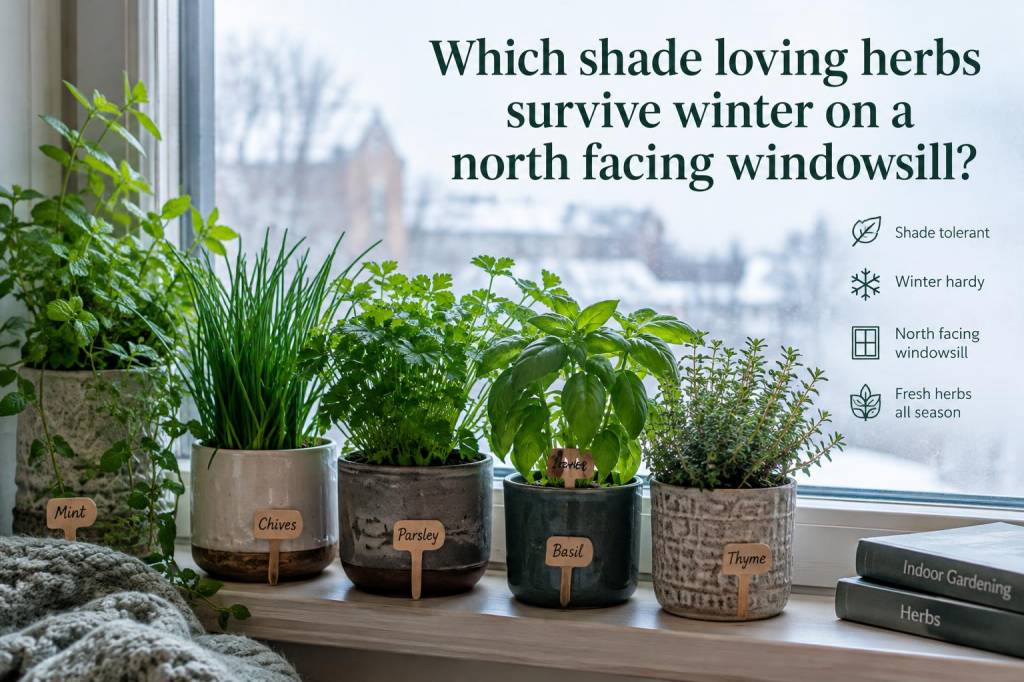
When winter settles in, my north-facing windowsill becomes a small test lab. Light is weak, temperatures swing near the glass, and many herbs slow down or give up altogether. Yet a few shade-loving herbs can stay useful through the cold months if I choose them carefully and treat them with a little restraint. I have learned that winter survival indoors is less about forcing growth and more about keeping plants steady, compact, and comfortably dormant or semi-active until spring returns.
A north-facing windowsill is not a bright stage. It gives gentle light, long shadows, and often a cooler microclimate than the rest of the room. That can be a problem for sun-hungry herbs like rosemary, basil, and thyme if they are already stressed by short days. But for certain shade-tolerant herbs, this setting can actually be an advantage. They dislike scorching indoor sun, and they cope better with softer light, provided I manage watering, airflow, and pot size with care.
What usually survives winter in soft light
In my experience, the herbs most likely to survive on a north-facing windowsill are the ones that naturally tolerate cooler weather, partial shade, or woodland edges. They may not grow quickly in winter, and some will look a little sleepy, but they can remain alive and useful with surprisingly little fuss.
- Mint: very forgiving, especially in cool indoor conditions, though it needs regular moisture and a container of its own.
- Lemon balm: hardy, adaptable, and one of the easiest herbs to keep going through winter indoors.
- Parsley: slow in winter light, but often stays alive if it had a strong root system before moving inside.
- Chervil: prefers cool conditions and softer light, so it suits a north-facing window well.
- Chives: not a true shade lover, yet they usually tolerate winter indoor life better than many herbs.
- Cilantro: can be tricky, but it often does better in cool, gentle light than in hot, dry indoor spots.
- Culinary sorrel: I have found it especially resilient, with a fresh, tangy harvest even in dimmer conditions.
I do not expect all of these to thrive in the same way. Some will keep producing leaves, while others will mostly hold their shape until conditions improve. That distinction matters. A herb that merely survives winter can still be valuable if it keeps its roots healthy and its foliage usable.
Why some herbs handle a north-facing window better
Herbs that survive here usually share a few traits. They tolerate cooler temperatures, they do not demand intense sun, and they are less likely to collapse when growth slows. Winter indoors is often harder because of dry air from heating, irregular watering, and weak light all at once. A plant that can accept a slower pace has a real advantage.
Mint and lemon balm are especially resilient because they are naturally vigorous plants. They do not love being confined, but they adapt. Parsley and chives are more moderate, staying productive without needing constant attention. Chervil and sorrel are my quiet winners because they seem content in cooler, softer light where other herbs sulk. Cilantro can be fussy, yet if I keep it cool and evenly moist, it often behaves far better than expected.
I have also noticed that herbs with thin, tender foliage often dislike the harsh contrast between cold windows and hot radiators. If a plant sits too close to the glass, leaves can chill at night and dry during the day. That is why I usually move pots a little back from the pane rather than pressing them against it. A few inches can make a real difference.
My favorite winter setup for these herbs
For indoor winter herbs, I keep my setup simple. I use pots with drainage holes, a light soil mix, and saucers that do not trap water for long. I avoid oversized containers because extra soil stays wet too long in winter, which can lead to root trouble. A modest pot is often better than a generous one.
I also rotate the pots every few days so the plants do not lean toward the light. Even on a north-facing windowsill, light direction still matters. If I see stems stretching thin and pale, I know the plant wants more brightness than it is getting. In that case, I may supplement with a small grow light for a few hours in the evening, especially for parsley or cilantro. I do not aim for full summer growth, only enough light to keep foliage compact and healthy.
Watering is where many indoor herbs fail. I water less often in winter, but I never let the soil turn completely dusty for long. Mint and lemon balm prefer steady moisture, while parsley and chives like a more measured approach. I always check the top layer of soil with my fingers before watering. If it still feels damp, I wait.
What I do with each herb
Mint is one of my easiest winter companions, but I keep it in its own pot because it spreads aggressively. Indoors, I trim it lightly and use the leaves fresh rather than trying to push for a big harvest. A cool room helps prevent lanky growth.
Lemon balm behaves in a similar way. It does not need pampering, just a little consistency. I pinch back any weak stems and keep the plant on the slightly cool side. If I forget about it for a few days, it usually forgives me.
Parsley needs more patience. It can sit there looking nearly motionless, and then suddenly put out a few fresh leaves when the light improves. I harvest from the outside first so the center keeps growing. If the plant was healthy before winter, I often get a decent indoor run from it.
Chives are useful because they are sturdy and tidy. I snip them rather than pulling individual leaves, and I do not cut too much at once. If the plant starts to look tired, I give it a brief rest and reduce harvesting.
Chervil is delicate, but it suits this window beautifully. It likes cool, even conditions and does not enjoy intense sun. I treat it almost as a bonus herb: a little trim for salads, soups, or egg dishes, never a heavy harvest.
Cilantro is the one I watch most closely. It bolts easily in warm bright rooms, but on a north-facing sill it can remain usable longer. I keep it cool, water carefully, and never let it dry out completely. If it starts to fade, I accept that it has done enough.
Sorrel often impresses me the most. Its leaves keep a lively, tart flavor, and it seems less bothered by winter light than many herbs. I use it sparingly because a little goes a long way.
Common problems and what I do about them
Yellow leaves usually mean one of three things: too much water, too little light, or too much cold at the window edge. I first check moisture, then move the plant slightly inward if frost-like chill seems to be affecting it. If the soil stays wet for too long, I let it dry more before watering again.
Leggy growth usually points to low light. That is common on a north-facing windowsill in winter. I respond with rotation, lighter pruning, or a small grow light. I do not expect the plant to become lush overnight. I only want steadier, stronger stems.
Dry leaf edges often come from indoor heating. A pebble tray can help a little, though I never rely on it alone. I keep herbs away from direct radiator blasts and avoid misting too heavily, since damp foliage in cool winter air can invite trouble. Moderate humidity and good air movement work better for me than constant spraying.
Fungus gnats can appear if the soil stays too wet. I let the surface dry more between waterings and remove any fallen debris from the pot. Clean habits matter indoors, where pests can spread quickly from one container to another.
A simple winter ranking from my own experience
| Herb | Winter survival on north-facing window | My notes |
|---|---|---|
| Mint | Very strong | Needs its own pot and steady moisture |
| Lemon balm | Very strong | Easygoing and forgiving |
| Parsley | Strong | Slow, but reliable with enough root health |
| Chives | Strong | Tidy and steady with light trimming |
| Chervil | Strong | Loves cool, gentle light |
| Cilantro | Moderate | Needs careful watering and cool air |
| Sorrel | Very strong | Excellent winter survivor in soft light |
When I decide which herbs to keep indoors for winter, I think less about abundance and more about usefulness. A few leaves of mint in tea, a handful of parsley for soup, snipped chives for eggs, or a little sorrel for brightness can make the season feel more alive. The north-facing windowsill may not be glamorous, but it can still support a small, dependable herb harvest if I choose plants that appreciate restraint and cool light.
I also find that winter herb care changes my pace in a good way. I spend more time observing than producing. I notice how a stem leans toward the window, how the soil dries, how leaves shift from glossy green to a softer matte finish. That quieter rhythm helps me keep plants alive through the darkest months without demanding too much from them.
So when people ask me which shade-loving herbs survive winter on a north-facing windowsill, I usually answer with a short list first: mint, lemon balm, parsley, chives, chervil, cilantro, and sorrel. Then I add a more honest answer: survival depends on balance. Keep the roots healthy, keep the air cool but not cold, keep the soil barely moist rather than wet, and accept slower growth. That is where winter herbs do their best work for me.