I love the little magic of forcing bulbs indoors: a handful of cool, dormant bulbs turning into fragrant flowers while it’s still grey outside always feels like a small celebration. Over the years I’ve forced dozens of bulbs on sunny windowsills and even on warm radiators when space was tight. With a bit of planning you can enjoy crocus, hyacinths, narcissus and early tulips weeks ahead of garden blooms. Below I share practical, tried-and-true steps, troubleshooting tips and styling ideas so you can force bulbs successfully and make them a cheerful part of your home décor.
Which bulbs are best for forcing?
Not all spring bulbs force equally well. My favourites because they’re reliable, fast and fragrant are:
Hyacinths – dramatic scent and dense flower spikes, great for pots or forcing kits.Paperwhite narcissus – no cold required, so they’re perfect if you skipped chilling.Early crocus – small, charming and quick to bloom.Galanthus (snowdrops) – delicate and elegant if you can source them.Early tulips (species tulips) – need good chilling but reward you with bold colour.Forcing-friendly bulbs are usually labeled for “indoor forcing” or “pre-cooled” at garden centres. If you can, buy firm, healthy bulbs without soft spots or mould.
Do bulbs need chilling? Cold treatment explained
Most spring bulbs (hyacinths, tulips, crocus, snowdrops) require a period of cold to break dormancy and set flower buds. This mimics winter conditions. I keep the process simple:
Temperature: 2–9°C (35–48°F) is ideal.Duration: typically 10–16 weeks. Hyacinths and tulips often need the full 12–16 weeks; crocus and narcissus sometimes do with less.Where to chill: a garage, unheated shed, or the back of a fridge (not the crisper with fruit) works well. You can also use a chill bag in a fridge set to a dedicated shelf.If you’ve bought pre-chilled bulbs from a supplier, you can skip the cold period and plant straight away.
Choosing pots and growing medium
Use pots with good drainage. Bulbs don’t like sitting in water. I prefer terracotta for windowsills because they breathe, but plastic crocks are fine for radiators where pots need to be lighter. A 10–15 cm (4–6 in) pot suits 3–6 medium bulbs; smaller crocus need less depth.
Soil mix: a free-draining mix is key. I use 2 parts multipurpose compost + 1 part grit or horticultural sand. You can add a handful of perlite for extra drainage.Bulb orientation: plant with the pointy end up and the basal plate (flat end) down.Depth: general rule is plant bulbs at roughly twice their height. For mixed bulbs, place larger ones in the centre or back if you want staggered bloom heights.Forcing bulbs on a sunny windowsill
A sunny south- or west-facing windowsill is ideal because it gives steady cool light. Here’s my easy routine:
After chilling, pot the bulbs so the tops are just beneath the soil surface (some bulbs like hyacinth can peek out slightly).Water lightly after potting to settle the compost—bulbs need moisture to kick-start roots but avoid waterlogging.Place pots in a cool spot (10–13°C / 50–55°F) for the first 1–2 weeks if possible to encourage steady root growth before moving to a warmer, brighter spot. If your windowsill is warm, keep them a little back from direct heat.Once shoots appear, rotate pots regularly so stems grow straight toward the light.Move into brighter, slightly warmer light (15–18°C / 60–65°F) to speed flowering.Forcing on a radiator or near a heater
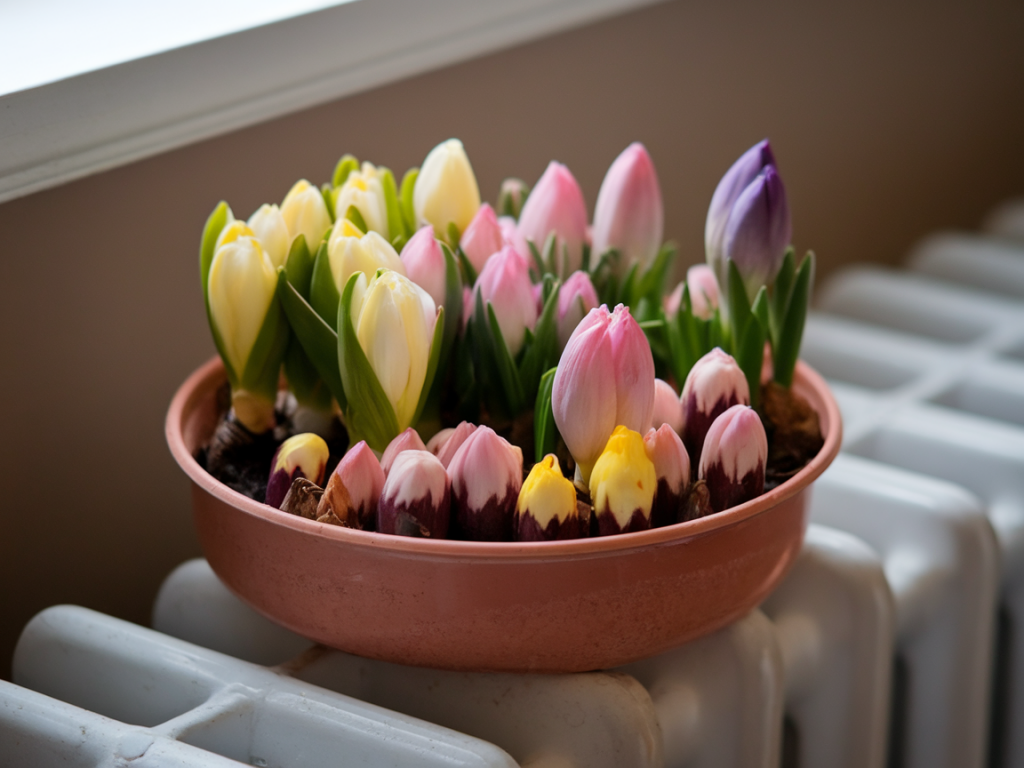
Forcing on a radiator needs a little extra attention because radiators dry soil fast and can stress plants. I still use this method in small apartments—here’s how to make it work:
Choose varieties that are resilient to drier, warmer conditions—narcissus and paperwhites tolerate warmth best.Use larger pots or liners that hold more moisture; add a 1–2 cm (½–1 in) layer of gravel at the base to improve drainage without drying out soil immediately.Water more frequently but lightly; check soil daily. The top 1–2 cm (½–1 in) of soil should be allowed to dry slightly between waterings—never bone dry.Place a tray of water behind the pots if radiators are very hot to increase ambient humidity. Alternatively, raise pots on small cork blocks to avoid direct heat on the pot base.Lighting, temperature and timing
Light is key for compact growth and good colour. If your windowsill is bright, you’ll get tighter stems and more flowers. If light is limited, rotate pots and consider a small LED grow light set on a timer for supplemental light (4–6 hours in the evening helps if mornings are dark).
Tipping points:| Too warm too early | Stems grow long and floppy; blooms open quickly and fade. |
| Too cold | Delayed growth and longer bud development. |
| Insufficient water | Stunted growth, poor flowering. |
Feeding and care during bloom
Bulbs store most of their nutrients inside, so you don’t need heavy feeding. A light feed helps if you want repeat blooms after forcing:
Apply a half-strength liquid fertiliser once buds appear (high phosphorus bloom fertiliser like a 5-10-5 formula works).Deadhead spent flowers to tidy the display and encourage any remaining bulbs to finish their cycle.Troubleshooting common problems
Here are problems I often see and how I fix them:
Leggy growth: Too much warmth and low light. Move to a cooler spot or add bright light; avoid high temperatures until after buds form.Mould or rot: Overwatering or poor drainage. Repot if bulbs are soft; discard rotten bulbs and sterilise pots. Use gritty mix and ensure drainage holes are clear.No blooms: Likely insufficient chilling or bulbs were weak. For next time, ensure a full cold period and buy larger, higher-quality bulbs (size matters—larger bulbs often produce better blooms).Styling ideas for indoor displays
Bulb displays are perfect for bringing seasonal colour to living rooms and kitchens. A few styling tips I use:
Group several pots at different heights on a tray for a polished vignette. Add moss or decorative pebbles on top of the soil for a finished look.Use vintage crocks or ceramic bowls for a cottage-style display. For radiators pick lightweight plastic or thin-walled terracotta to avoid warping.Try forcing bulbs in glass hyacinth vases or bulb basins filled with pebbles and water (no soil). These are great for hyacinths and narcissus but require more frequent water changes to prevent rot.Forcing bulbs is one of my favourite winter projects: it’s low-cost, reliable and the reward of seeing vibrant, fragrant flowers indoors during the cold months never loses its charm. If you want, tell me which bulbs you have and where you plan to place them (radiator or windowsill) and I’ll suggest a customised plan—varieties, chilling time and pot size that will work best for your space.