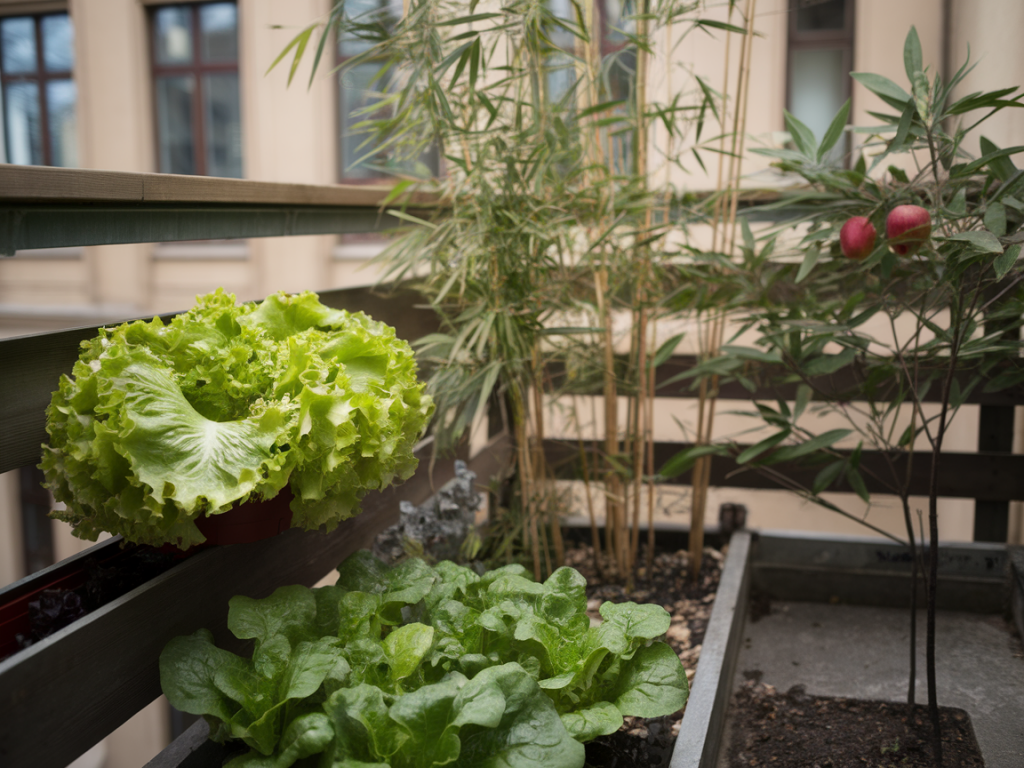
I often get asked whether a north-facing balcony can actually feed you anything more than a few pot herbs. The short answer is yes—if you choose the right edibles and arrange them with light, microclimates and harvest timing in mind. I’ve spent seasons turning shaded, cool balconies into productive little kitchens: leafy greens, herbs, root vegetables and even a few surprising fruits. Below I share practical plant choices, how to place them for maximum results, and a seasonal rhythm that keeps fresh food coming from the shadiest corners.
First step: assess your balcony’s light and microclimates
Before buying plants, spend several days tracking the light. On a true north-facing balcony you’ll rarely get direct sun—maybe a couple of hours of slanted morning or evening light depending on nearby buildings. Note where reflected light falls (pale walls and glass can boost light) and where wind and heat accumulate (corners near hot pipes can be warmer). Those little differences determine which edibles will actually flourish.
Also check these practical details:
Shade-tolerant edibles that reliably produce on a north-facing balcony
Here are the plants I return to again and again. They tolerate low light and still give you a meaningful harvest.
| Plant | Type | Sowing/Planting | Harvest window | Notes |
|---|---|---|---|---|
| Lettuce (cut-and-come-again) | Leaf | Sow spring & autumn; succession sow every 2–3 weeks | 4–8 weeks after sowing | Best in partial shade; choose loose-leaf mixes |
| Spinach | Leaf | Sow early spring/autumn | 6–8 weeks | Thrives in cool, shady spots; bolt-resistant varieties in cool climates |
| Pak choi & mustard greens | Leaf | Sow spring to autumn | 4–7 weeks | Fast growers for continuous harvests |
| Chard (silverbeet) | Leaf | Transplant/sow spring or autumn | Cut outer leaves continually | Does well in shade and produces over months |
| Herbs: mint, parsley, chives, lemon balm | Herb | Spring/anytime for chives & parsley | Continual | Mint likes shade—keep it contained; basil prefers brighter spots but some varieties tolerate shade |
| Radishes | Root | Sow spring & autumn | 3–6 weeks | Rapid turnover and perfect for succession planting |
| Spring onions / scallions | Bulb/leaf | Sow spring/autumn | 8–12 weeks | Great in small pots and tolerates low light |
| French beans (bush types) | Pod | Start in the warmest months | 8–12 weeks | Perform better than you might expect if you can catch a few extra hours of light |
| Strawberries (alpine varieties) | Fruit | Plant in spring | Late spring to summer | Alpines tolerate shade better than standard varieties |
| Salad burnet & sorrel | Leaf | Spring/early autumn | Continual | Perennial flavors that do well in shade |
How I arrange containers for continuous harvests
Arrangement is as important as the plant choices. A north-facing balcony needs layered planning to catch light, save heat and make harvesting easy.
Scheduling plantings for steady harvests
I rely on succession sowing and mixing fast and slow crops. Here’s a simple cadence you can follow:
For a north-facing balcony, I avoid putting all my energy into one long-season crop; instead I intersperse quick harvests with longer producers so there’s always something to pick. Using a small calendar or app helps me remember sow dates for succession planting.
Care and maintenance—what really matters on a shaded balcony
Low light doesn’t mean low effort. Here’s how I keep things productive:
Design tips that make a shaded balcony feel abundant
I like to treat the balcony as an outdoor kitchen: functional, pretty and layered. Combine edible pots with a few evergreen foliage plants to keep the space lively year-round. Use matching containers to create cohesion, or mix terracotta and glazed pots for a more eclectic look. A small folding table that doubles as a potting station keeps things practical for harvest and sowing.
Finally, don’t underestimate taste and variety: varieties bred for cut-and-come-again, bolt resistance and shade tolerance make the biggest difference. Experiment with small trays first rather than filling the whole balcony at once—this saves money and lets you learn which plants truly suit your specific north-facing spot.